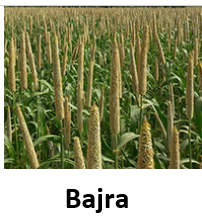
Overview:
- Scientific Name: Pennisetum glaucum
- Type: Cereal grain
- Origin: Africa
Climate and Soil Requirements:
- Climate: Bajra thrives in hot and dry climates.
- Temperature: Optimal temperature range is between 25°C to 35°C during the growing season.
- Soil Type: Well-drained sandy loam soil with a pH level between 6.0 to 8.5.
Varieties:
- Common Varieties: Common bajra varieties include HB3, HHB 67, and MH 1540.
Season:
- Planting Season: Plant bajra in the summer season when temperatures are high.
- Harvest Season: Harvest typically occurs in the autumn season.
Cultivation Process:
- Seed Selection and Planting:
- Choose high-quality seeds of a suitable variety.
- Plant seeds at a depth of 2 to 3 cm and spaced about 20 to 25 cm apart in rows.
- Ensure adequate moisture for germination.
- Fertilization:
- Apply well-decomposed farmyard manure or compost before planting.
- Top-dress with nitrogen fertilizer at the time of sowing and again after 30 days.
- Watering:
- Bajra is drought-tolerant but requires water during critical growth stages.
- Provide irrigation during flowering and grain formation stages.
- Weed Control:
- Control weeds through timely and shallow cultivation.
- Avoid deep plowing to prevent burying weed seeds.
- Disease and Pest Management:
- Monitor for pests such as shoot fly and diseases like downy mildew.
- Use resistant varieties and adopt crop rotation practices to manage pests and diseases.
- Harvesting:
- Harvest when grains are fully mature and hard.
- Use a sickle or mechanical harvester to cut the crop at ground level.
- Thresh the harvested grains to separate them from the chaff.
Additional Tips:
- Rotate bajra crops with legumes to improve soil fertility.
- Consult local agricultural experts for specific recommendations based on your region.